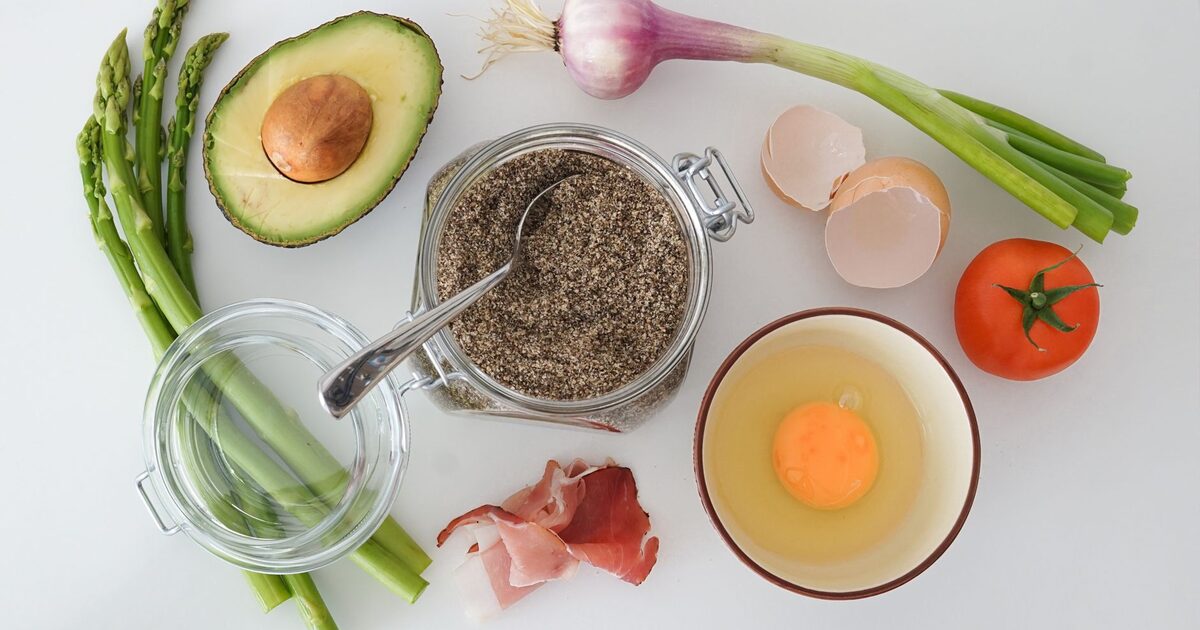
Cut your carbs low enough for long enough, and your metabolism does something clever: it stops running on sugar and starts running on fat. That metabolic switch is the entire point of the ketogenic diet. Done well, keto can steady your energy, blunt hunger, and help with fat loss. Done carelessly, it gives you a week of headaches and a fridge full of cheese you're not sure what to do with. This guide gets you the first version.
What ketosis actually is
Your body's default fuel is glucose from carbohydrates. Eat carbs and your blood sugar rises, insulin shuttles that glucose into cells, and any surplus gets stored. Strip carbohydrates out of the picture and within a couple of days your liver starts converting fatty acids into ketone bodies — beta-hydroxybutyrate, acetoacetate, and acetone — which your brain and muscles burn in glucose's place. That state is called nutritional ketosis, and it's measurable: blood ketones sitting between 0.5 and 3.0 mmol/L.
This is not the same as ketoacidosis, the dangerous condition seen in unmanaged type 1 diabetes. Nutritional ketosis is a controlled, low-level rise in ketones. Ketoacidosis is ketones running 10× higher with no insulin to regulate them. Worth knowing the difference so the word "keto" doesn't alarm you.
The macro split that gets you there
Keto is defined by ratios, not by any single food. The target most people aim for:
| Macronutrient | Share of calories | What it looks like |
|---|---|---|
| Fat | 70–75% | Olive oil, avocado, eggs, fatty fish, nuts |
| Protein | 15–20% | Meat, poultry, fish, eggs (~1.2–2.0 g per kg bodyweight) |
| Carbohydrate | 5–10% | Leafy greens, broccoli, berries in small amounts |
The number that actually matters is net carbs — total carbohydrate minus fibre. A strict ketogenic approach keeps net carbs around 20 g per day; many people maintain ketosis comfortably up to 30–50 g, depending on how active they are and how insulin-sensitive. Twenty grams is less than it sounds: one banana and a slice of bread and you're done for the day. That's why keto lives on non-starchy vegetables, protein, and fat, with grains, sugar, most fruit, and starchy vegetables off the menu.
Don't undereat protein out of fear it will "kick you out" of ketosis — for the vast majority of people it won't, and protein is what protects your muscle while you lose fat. If you want the full case for prioritising it, the principles in our plant-based muscle-building guide apply on keto too, just with different ingredients. For meals that already hit these ratios, our recipe library is filtered by macro.
The first two weeks: keto flu and how to skip it
Around days 2 to 7, a lot of beginners feel rough — headache, fatigue, brain fog, irritability, maybe a poor night's sleep. This is the "keto flu," and it's almost never the absence of carbs causing it. It's the loss of electrolytes.
Here's the mechanism: dropping carbs drops insulin, and lower insulin tells your kidneys to flush sodium and water. Sodium drags potassium and magnesium out with it. Replace those three and most of the misery disappears within a day. Practical targets while adapting:
- Sodium: an extra 3–5 g per day — salt your food generously, sip salted broth.
- Potassium: from avocado, spinach, and other low-carb plants; a large avocado has roughly 700 mg.
- Magnesium: 300–400 mg, often easiest as a supplement since it's hard to hit on any diet.
Drink to thirst rather than forcing litres of plain water, which only dilutes the electrolytes you're trying to keep. The flu is temporary; full fat-adaptation — when your body is genuinely efficient at burning fat for fuel — takes longer, usually 2 to 4 weeks and sometimes more.
How to know you're actually in ketosis
You don't have to guess. Three ways to check, in rough order of accuracy:
- Blood ketone meter. A finger-prick reading like a glucose monitor. The gold standard. Anything from 0.5 mmol/L up confirms nutritional ketosis.
- Breath acetone meter. A reusable device that estimates ketones from your breath. Less precise but no consumables and no blood.
- Urine strips. Cheap and fine for the first couple of weeks, but they measure excess ketones you're spilling, so they get less useful once you're adapted and using ketones efficiently.
You'll also notice the soft signs: appetite drops, the mid-afternoon energy crash fades, and a faint metallic taste or slightly fruity breath from acetone. None of those are required — plenty of people are in ketosis without the breath change.
Who keto suits, and who should skip it
Keto has a genuinely strong track record for fat loss (largely because protein and fat are filling, so you eat less without counting), for steadying blood sugar in type 2 diabetes and prediabetes, and it remains a medically established treatment for drug-resistant epilepsy. Many people simply like the steady, hunger-free energy.
It is not for everyone. Skip it, or only attempt it under medical supervision, if you are pregnant or breastfeeding, have type 1 diabetes, or have a history of disordered eating, kidney disease, pancreatitis, or gallbladder problems. One specific caution: if you take medication for blood sugar (insulin, sulfonylureas) or blood pressure, keto can lower both fast, and your doses may need adjusting — that's a conversation to have with your doctor before you start, not after you feel dizzy.
Setting it up so it sticks
The people who fail at keto almost always fail on logistics, not willpower. A few things that make it stick:
- Track for the first three weeks. Hidden carbs are everywhere — sauces, "low-fat" yoghurt, a surprising amount in nuts. Logging your macros in the FitBot Coach app until you can eyeball a plate is the single highest-leverage habit.
- Clear the kitchen. You can't eat the bread that isn't there. Replace pasta and rice with courgette, cauliflower, and shirataki.
- Train smart while you adapt. Strength work holds up well on keto from day one; high-intensity intervals and sprints feel terrible for the first few weeks until you're fat-adapted, so ease off the all-out efforts early. Build sessions from our exercise library and expect performance to rebound, not vanish.
- Decide on a version. Standard keto suits most people. If your training is genuinely high-intensity, a targeted approach — a small dose of carbs around workouts — can help without derailing ketosis.
A common next step once keto feels routine is to pair it with time-restricted eating, since both lower insulin and the two stack naturally; our intermittent fasting primer covers how to layer them without overdoing the restriction.
The honest summary
Keto works by forcing a fuel switch from glucose to fat, and you reach it by holding net carbs near 20 grams a day while eating enough protein and plenty of fat. Budget for a rough first week, fix it with salt and electrolytes rather than suffering through it, and confirm you're actually in ketosis instead of assuming. It is a powerful tool for some people and a poor fit for others — match it to your goals, your training, and your health history, and it earns its place.
Key takeaways
- Keto switches your fuel from glucose to ketones; nutritional ketosis is blood ketones of 0.5-3.0 mmol/L.
- Aim for roughly 70-75% fat, 15-20% protein, 5-10% carbs, with net carbs near 20 g/day.
- Keto flu around days 2-7 is electrolytes, not carbs: add 3-5 g sodium plus potassium and magnesium.
- Confirm ketosis with a blood ketone meter rather than guessing; urine strips fade once you adapt.
- Skip keto or get medical sign-off if pregnant, type 1 diabetic, or on blood sugar or blood pressure meds.
Frequently asked questions
How many carbs can I eat on keto?
Most people reach and hold ketosis at around 20 g of net carbs (total carbs minus fibre) per day. More active or insulin-sensitive people can often go up to 30-50 g. Net carbs, not total, is the number that matters.
How long does it take to get into ketosis?
You can enter ketosis within 2 to 4 days of cutting carbs hard. Full fat-adaptation, when your body burns fat efficiently and energy and performance recover, usually takes 2 to 4 weeks or longer.
Is the keto flu dangerous?
No. It is a temporary cluster of headaches, fatigue, and brain fog around days 2-7, caused by losing sodium, potassium, and magnesium as insulin drops. Replacing those electrolytes clears it within a day or so for most people.