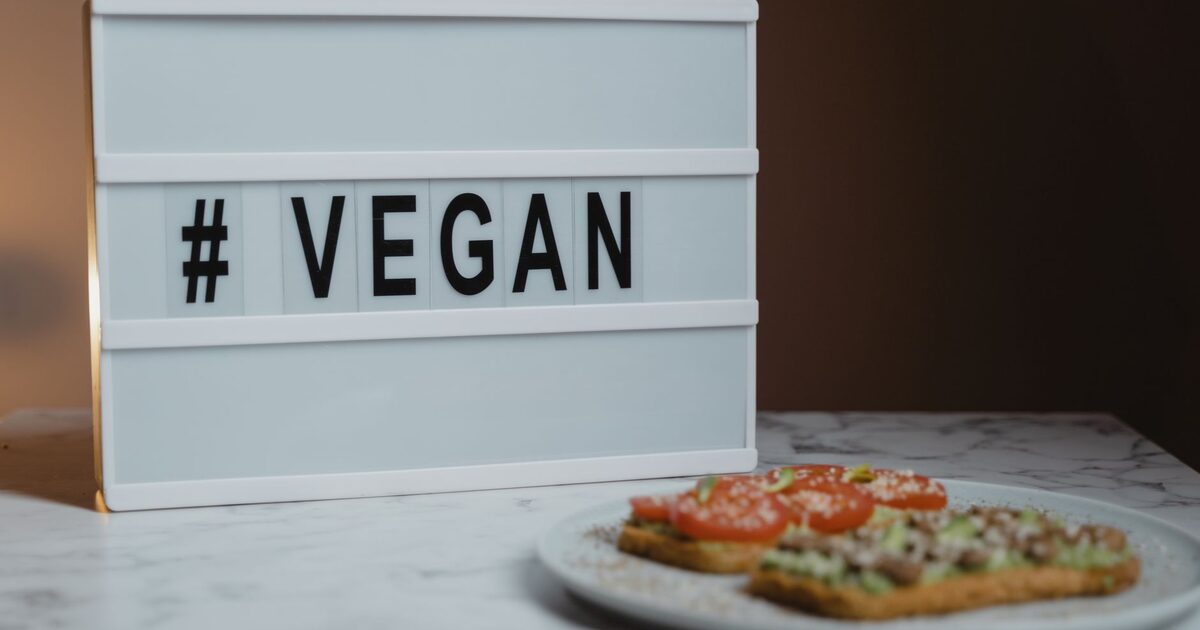
The idea that you can't build muscle without meat is one of the most stubborn myths in lifting, and it's wrong. Plenty of strong, muscular people eat entirely plants. What's true is that a plant-based diet makes a few things harder — you have to be more deliberate about how much protein you eat, where it comes from, and a handful of nutrients that are easy to come by in animal foods. Get those right and your muscle doesn't know or care that your protein arrived as lentils instead of chicken. This guide is the deliberate part.
Muscle is built by training; food just lets it happen
Before the diet talk, the order of operations matters. Muscle grows in response to progressive overload — adding reps, weight, or sets to challenging compound lifts over weeks and months. No eating pattern, vegan or otherwise, builds muscle on its own. Diet is permission, not stimulus. So your first job is a training plan that pushes hard sets close to failure, 10–20 working sets per muscle group per week, with the squat, hinge, press, and pull at its centre. Build sessions from our exercise library and treat the nutrition below as the support structure that lets that training turn into tissue.
Obstacle one: hitting enough protein
The single biggest determinant of muscle gain from your diet is total daily protein. The target for someone training to build muscle is 1.6 to 2.2 grams of protein per kilogram of bodyweight. On a plant-based diet I'd push toward the upper end — call it 1.8 to 2.2 g/kg — for a reason covered in the next section. For an 80 kg lifter that's roughly 145 to 175 g a day.
That's harder on plants because protein comes bundled with carbohydrate and a lot of fibre. A cup of cooked lentils gives you 18 g of protein but also 40 g of carbs and around 16 g of fibre. Hit 170 g of protein purely from whole legumes and grains and you'll be uncomfortably full and possibly over your calories. The fixes are practical:
- Build meals around the dense plant proteins: tofu, tempeh, edamame, seitan, and legumes, not just incidental protein from grains and vegetables.
- Use a protein isolate. A scoop of pea or soy isolate adds 20–25 g of protein for almost no fibre and minimal volume — the easiest way to close a daily gap.
- Spread it across 3–5 meals of roughly 0.4 g/kg each, rather than backloading it all at dinner.
Obstacle two: protein quality and the leucine threshold
Not all protein is equally usable. Animal proteins are complete — they contain all nine essential amino acids in good ratios — and highly digestible. Many plant proteins are lower in one or more essentials (grains run short on lysine, legumes on methionine) and are digested slightly less efficiently. That's the real reason to aim higher on total intake: you're compensating for lower digestibility, not for some mystical inferiority.
The amino acid that matters most here is leucine, the trigger for muscle protein synthesis. Each meal wants roughly 2.5 to 3 grams of leucine to fully switch on that signal. Here's the catch: most plant proteins are about 7–8% leucine, so a single 20–25 g serving lands around 1.5–2 g — just under the threshold. Two ways to clear it: size servings up to 30–40 g, or lean on the best sources. Soy (tofu, tempeh, edamame, isolate) is the standout, effectively complete and leucine-rich; pea protein is close behind.
| Source | Serving | Protein | Approx. leucine |
|---|---|---|---|
| Soy protein isolate | 1 scoop (30 g) | ~25 g | ~2.0 g |
| Tempeh | 150 g | ~30 g | ~2.3 g |
| Firm tofu | 200 g | ~20 g | ~1.6 g |
| Edamame | 1 cup (155 g) | ~18 g | ~1.4 g |
| Lentils, cooked | 1 cup (200 g) | ~18 g | ~1.3 g |
| Seitan | 100 g | ~24 g | ~1.7 g |
Ignore the old rule about "combining" proteins at every meal. Eat a variety of sources across the day and the amino acid gaps fill themselves in — just make sure each main meal hits its leucine number.
Obstacle three: the nutrients animal foods hand you for free
A few nutrients sit naturally in meat, fish, eggs, and dairy and need active attention on plants. None are exotic to fix, but ignoring them quietly undercuts recovery and performance.
- Vitamin B12 — non-negotiable. It isn't reliably present in plant foods, and a deficiency causes fatigue and nerve problems. Supplement: 25–100 µg daily, or about 2,000 µg once a week.
- Creatine — stored in muscle and found almost only in meat, so vegans start with lower levels. That means the standard 3–5 g a day of creatine monohydrate tends to give plant-based lifters a noticeably bigger bump in strength and even some cognitive measures. It's the one performance supplement I'd call close to essential here.
- Omega-3 (EPA and DHA) — the forms in fish. Plant ALA from flax and walnuts converts poorly, so use an algae oil supplying 250–500 mg combined EPA/DHA daily.
- Iron and zinc — present in plants but absorbed less efficiently. Pair iron-rich foods (lentils, tofu, spinach) with vitamin C to boost uptake, and keep zinc sources like pumpkin seeds and legumes in regular rotation.
Vitamin D, iodine, and calcium are also easier to fall short on without dairy and fortified foods, so they're worth a check if your diet skews whole-food.
Obstacle four: eating enough total food
Whole plant foods are high in fibre and water and low in calorie density — wonderful for fat loss, a genuine nuisance when you're trying to gain. Building muscle needs a slight calorie surplus, around 200–400 extra calories a day, and a bowl of vegetables and beans fills your stomach long before it fills that quota. If the scale won't move up, you're not eating enough, not "a hard gainer." Lean on calorie-dense foods: olive oil, nuts and nut butters, tahini, avocado, dried fruit, and refined carbs like white rice around training. Liquid calories — a smoothie with soy milk, oats, peanut butter, and a banana — go down far easier than another plate. Our recipe library has higher-calorie plant meals when you need ideas.
A simple day that works
To make it concrete, here's how an 80 kg lifter reaches ~170 g of protein without living on shakes:
- Breakfast: oats with soy milk, a scoop of soy isolate, peanut butter, berries — ~35 g.
- Lunch: tempeh stir-fry with edamame, brown rice, and vegetables — ~40 g.
- Snack: soy yoghurt with pumpkin seeds, or a protein shake — ~25 g.
- Dinner: lentil and bean chilli with tofu, plus quinoa — ~45 g.
- Evening: a handful of almonds and a soy milk — ~15 g.
Log it in the FitBot Coach app for the first few weeks — on plants, the protein number is rarely where people assume it is until they track it.
How it differs from other popular diets
Plant-based bodybuilding shares much of its plate with our Mediterranean diet — legumes, nuts, olive oil — just pushed harder on protein and stripped of fish and dairy. It sits at the opposite end from the paleo approach, which cuts the very legumes and grains a plant-based lifter leans on most. What builds muscle is the same across all three: enough protein, enough food, hard training.
The honest summary
Building muscle on plants is the same job as building it on any diet — train hard and progressively, eat enough protein, eat enough total food — with three extra boxes to tick. Aim for 1.8–2.2 g/kg of protein from dense sources like soy, tempeh, and isolates; make each meal clear the leucine threshold; and cover B12, creatine, omega-3, iron, and zinc so nothing silently holds back recovery. Do that consistently and "vegan" stops being a limitation and becomes a sourcing detail. Your muscles respond to the inputs, not the label.
Key takeaways
- Training drives muscle growth; diet only permits it, so progressive overload comes before any food tweak.
- Aim for 1.8-2.2 g of protein per kg of bodyweight, leaning high to offset lower plant digestibility.
- Each meal should clear ~2.5-3 g of leucine; soy, tempeh and pea or soy isolate get you there fastest.
- Supplement B12 (25-100 ug/day) and creatine (3-5 g/day), plus algae omega-3, and mind iron and zinc.
- Whole plant foods are filling and low-calorie, so use oils, nut butters and shakes to reach a slight surplus.
Frequently asked questions
Can you really build muscle on a vegan diet?
Yes. Muscle growth depends on progressive resistance training plus enough total protein and calories, none of which require animal products. As long as you hit your protein target and train hard, your muscles respond identically to plant or animal protein.
How much protein do vegan bodybuilders need?
Aim for about 1.8 to 2.2 grams of protein per kilogram of bodyweight daily, slightly higher than the usual 1.6-2.2 g/kg to offset the lower digestibility of plant proteins. Spread it across 3-5 meals, leaning on dense sources like tofu, tempeh, legumes and protein isolates.
What supplements do vegans need for building muscle?
Vitamin B12 and creatine are the two most important: B12 because plants don't reliably contain it, and creatine because vegans start with lower muscle stores and respond strongly to it. An algae-based omega-3 is also wise, and keep an eye on iron and zinc intake.