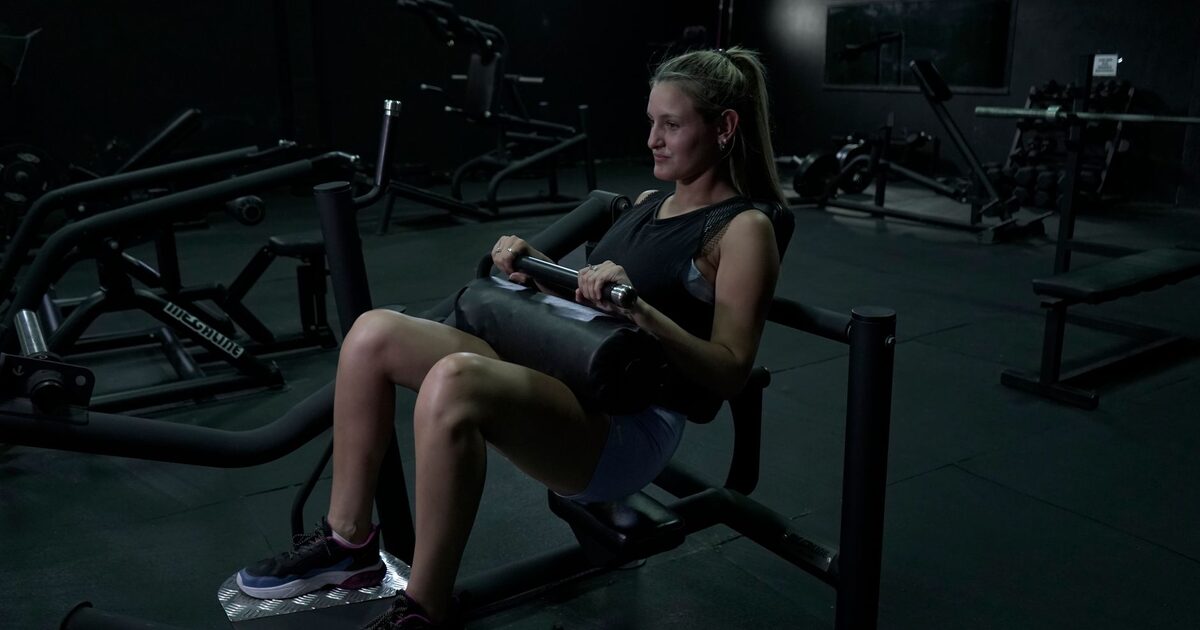
If you want bigger, stronger glutes, the hip thrust is hard to beat — and not because it's trendy. Most lower-body lifts load the glutes hardest at the bottom of a squat or hinge. The hip thrust does the opposite: it loads them hardest at full extension, exactly where the glutes do their real job of finishing hip drive, which is why it carries over to sprinting, jumping, and locking out a heavy deadlift. The catch is that a sloppy hip thrust quietly turns into a lower-back exercise. Here's how to set up, position your feet, and finish each rep so the work lands where you want it.
Why the hip thrust earns its place
The glutes are a hip extensor — their job is straightening the hip, pulling your thigh in line with your torso. In a squat, that resistance fades as you stand up: by the time you're upright, gravity pulls almost straight down your spine and the glutes barely work. The hip thrust keeps the load horizontal to your torso at the top, so peak tension hits at full lockout — the strength curve is hardest where the glutes are strongest, the opposite of nearly every other compound lift.
One quick distinction, because people use the terms interchangeably: a glute bridge is done on the floor, which limits your range to a few inches. A hip thrust puts your upper back on a bench, so your hips drop well below the bench line and travel through a much longer arc. More range under load means more growth stimulus — it's the upgraded version once you've got the pattern down.
Getting set up without the awkward part
The setup is where beginners fumble, mostly because wrestling a loaded barbell over your lap feels ridiculous at first. Walk through it the same way every session:
- Pick a stable bench at roughly knee height. About 16 inches (40 cm) works for most people. You want the edge to catch you just below your shoulder blades when you're at the top — too tall and you'll arch over it, too short and your range shrinks.
- Sit on the floor with your back against the bench, legs straight, and roll the loaded bar up over your thighs until it sits in the crease of your hips. Always use a thick pad or a folded mat between the bar and your hipbones — bare steel on the pelvis is genuinely painful and will end the set early.
- Plant your feet and lean back so your shoulder blades rest on the bench edge. You start with hips low, shins angled, and the bar parked on your hips ready to drive.
If barbell loading feels like too much while you're learning, a dumbbell on the hips, a single-leg version, or a machine hip thrust all teach the same movement — you'll find them set up step by step in our exercise library with demo clips.
Foot position decides which muscle works
This is the cue that separates a good hip thrust from a quad or hamstring exercise in disguise. The check is simple: at the top of the rep, your shins should be vertical — knees stacked directly over your ankles, like a tabletop.
- Feet too close to your hips and your knees travel past your toes at lockout. The quads take over and your heels want to lift.
- Feet too far away and you'll feel it mostly in the hamstrings, with the bar harder to control.
- Feet placed so shins finish vertical puts the glutes in the strongest position to do the work.
Set your stance roughly hip- to shoulder-width, toes pointed slightly out (around 15 degrees). Drive through your heels and mid-foot, not your toes — lifting your toes inside your shoes for the first few reps helps you feel that heel drive.
The rep: drive, lock, tuck
Before you move, take a breath and brace your abs — think "ribs down," not "chest up." A flared ribcage is the first step toward arching your lower back, which is the main thing we're avoiding.
Now drive your hips straight up by pushing the floor away through your heels. As you reach the top, do two things at once that make or break the lift:
- Tuck your chin and keep your eyes forward, not thrown back toward the ceiling. This keeps your pelvis and ribcage stacked instead of letting your head drift back and drag your spine into hyperextension.
- Finish with a posterior pelvic tilt. At full extension, squeeze your glutes hard and think about tucking your tailbone slightly under, as if you're trying to point your belt buckle at your chin. This is the part that actually targets the glutes — and it's the part most people skip.
Your torso and thighs should form a straight line at lockout, not a bridge that keeps climbing into a back arch. Do not chase extra height by overextending your lower back — that pushes the work onto your lumbar spine and is how the hip thrust earns its bad reputation. Pause for a full second at the top with everything squeezed, then lower under control until your hips are just off the floor and go again. That pause is where the glutes work hardest, so don't rush it.
Common faults and the fix
| Fault | What it means | The fix |
|---|---|---|
| Lower back arches at the top | Glute work shifts to the lumbar spine | Ribs down, tuck the chin, finish with a posterior pelvic tilt |
| Knees cave inward | Glutes losing the line of force | Push knees out toward your little toes as you drive up |
| Heels lift off the floor | Feet too close; quads taking over | Walk feet out until shins finish vertical; drive through heels |
| Half range, hips never lock out | Skips the strongest part of the curve | Reach full extension and pause; lighten the load if needed |
| Bar digs into hips | No padding or bar sitting too high | Use a thick pad; settle the bar into the hip crease |
Reps, sets, and where it fits
The glutes respond well to a wide range of reps, and the hip thrust is forgiving enough to load heavy or push for higher reps without much risk. A practical default is 3 to 4 sets of 8 to 12 reps, resting about 90 seconds to 2 minutes between sets. Because the squeeze at the top is the whole point, slightly higher reps with a hard one-second hold often beat grinding out heavy singles. If you train glutes twice a week, make one day a heavier 6 to 10 reps and the other a higher-rep 12 to 20 to chase the burn.
The hip thrust pairs with a squat or hinge rather than replacing them — it covers the top-end hip extension those lifts leave on the table, and it complements explosive work like the kettlebell swing, which trains the same extension at speed. The same "isolate the prime mover" logic shows up across the gym: just as foot and torso position steer a hip thrust toward the glutes, hand position and lean steer a dip toward the chest or triceps.
Progress it the way you would any lift — add a little weight or a rep when the current sets feel solid, and log every session so you're building on real numbers. Muscle is built on top of decent protein (roughly 1.6 to 2.2 g per kg of bodyweight a day), and a few high-protein recipes in your week make hitting that far easier. The FitBot Coach app tracks your hip thrust history set by set, so you walk up to the bench knowing exactly what to beat — which is how the weight climbs while your form holds.
Key takeaways
- The hip thrust loads the glutes hardest at full lockout, the opposite of squats and the reason it builds hip drive.
- Set your feet so your shins finish vertical at the top; too close shifts work to the quads, too far to the hamstrings.
- Drive through your heels and keep your ribs down to stop your lower back from arching.
- Finish every rep with a hard glute squeeze and a slight posterior pelvic tilt, then pause a full second.
- Train 3-4 sets of 8-12 reps; always pad the bar and use a bench at roughly knee height.
Frequently asked questions
What is the difference between a glute bridge and a hip thrust?
A glute bridge is done on the floor, which limits your range of motion to a few inches. A hip thrust rests your upper back on a bench so your hips travel through a much longer arc under load. The longer range makes the hip thrust the stronger choice for building the glutes once you have the pattern down.
Why does my lower back hurt during hip thrusts?
Almost always because you are arching your lumbar spine to chase extra height at the top instead of extending through your hips. Keep your ribs pulled down, tuck your chin to look at your knees, and finish with a posterior pelvic tilt rather than a back bend. If it still pinches, lighten the load and rebuild the squeeze.
How heavy should I go on hip thrusts?
The glutes tolerate a wide range, so you can load fairly heavy without much risk once your form is solid. A good default is 3 to 4 sets of 8 to 12 reps with a full one-second squeeze at the top. Add weight or a rep when the current sets feel controlled rather than jumping the load to chase a number.