A high-protein diet is one of the few nutrition strategies with broad agreement behind it: it helps you hold onto muscle while losing fat, keeps you full on fewer calories, and gives your training something to build with. The catch is that most people aiming for "more protein" still fall short of the amounts that actually move body composition. This guide covers what protein does, how much you need for your goal, and concrete meals that hit real numbers instead of vague advice.
What protein actually does for your body
Protein is the only macronutrient your body cannot store as a dedicated reserve the way it banks carbs as glycogen or energy as fat. You eat it, you use it, and the leftover amino acids get oxidised. That turnover is exactly why a steady daily intake matters, and why protein earns its reputation across three fronts.
- It protects muscle in a calorie deficit. When you diet, your body will strip lean tissue alongside fat unless you give it a reason not to. Adequate protein plus resistance training is that reason. In dieting studies, the higher-protein groups consistently lose a larger share of weight as fat and keep more muscle.
- It keeps you full. Gram for gram, protein is the most satiating macronutrient. Swap a low-protein breakfast for one with 30-40 g and most people eat noticeably less later in the day without trying.
- It costs more to digest. The thermic effect of food for protein is roughly 20-30% of the calories it contains, versus 5-10% for carbs and 0-3% for fat. Eat 150 g of protein (600 kcal) and you burn somewhere around 120-180 of those calories just processing it.
None of this requires a gym membership to start mattering, though strength work is what turns "protected muscle" into "more muscle." If you want a place to begin, our exercise library has the compound lifts that pair best with a higher intake.
How much protein do you actually need?
The official RDA of 0.8 g per kg of body weight is a floor to prevent deficiency in sedentary adults, not a target for anyone training or dieting. For body composition, aim higher. The ranges below are per kilogram of body weight per day.
| Your goal | Target (per kg/day) | Example: 75 kg person |
|---|---|---|
| General health, active | 1.2-1.6 g | 90-120 g |
| Building muscle | 1.6-2.2 g | 120-165 g |
| Fat loss (preserving muscle) | 1.8-2.7 g | 135-200 g |
Two practical notes. If you carry significant excess body fat, base the calculation on a target or lean body weight rather than your scale weight, otherwise the numbers get unrealistically high. And the upper end of the fat-loss range exists because protein's appetite control and muscle protection matter most when calories are scarce, so dieters benefit from leaning higher rather than lower.
Spread it across the day
Hitting your total is what matters most, but distribution helps. Muscle protein synthesis responds to a dose of roughly 0.4 g/kg per meal, which is about 25-40 g for most people, driven largely by the amino acid leucine. Three to four meals at that size beats one giant protein hit at dinner and a token amount at breakfast. You don't need to obsess over timing windows; just avoid back-loading everything into one meal.
Quality, not just quantity
"Complete" proteins contain all nine essential amino acids in usable ratios. Animal sources (meat, fish, eggs, dairy) are complete and leucine-rich, which is why a smaller serving does the job. Most single plant sources are lower in one or more essentials, but this is a non-issue if you eat varied plants across the day, or simply eat enough total protein. A few reference points by source:
- Chicken breast, 100 g cooked: ~31 g protein
- Lean beef mince (5% fat), 100 g cooked: ~26 g
- Salmon, 100 g cooked: ~25 g
- Eggs: ~6 g each (a 3-egg scramble is ~18 g)
- Greek yoghurt (0% fat), 170 g: ~17 g
- Tofu, firm, 100 g: ~17 g; tempeh, 100 g: ~20 g
- Lentils, cooked, 100 g: ~9 g
- Whey protein, 1 scoop: ~24 g
Plant-based eaters can absolutely build a high-protein diet; it just takes more deliberate planning and often a scoop of soy or pea protein to close the gap. Lean, lower-fat sources also let you fit more grams into your calorie budget, which is the whole game when you're cutting.
Meal ideas that hit the numbers
Templates beat recipes when you're learning, because you can swap ingredients and keep the structure. Each of these lands around 30-45 g of protein.
Breakfast
- Three-egg scramble plus 100 g smoked salmon and spinach (~42 g)
- 250 g Greek yoghurt, a scoop of whey, berries and oats (~45 g)
- Overnight oats made with milk, whey stirred in, and a spoon of peanut butter (~35 g)
Lunch and dinner
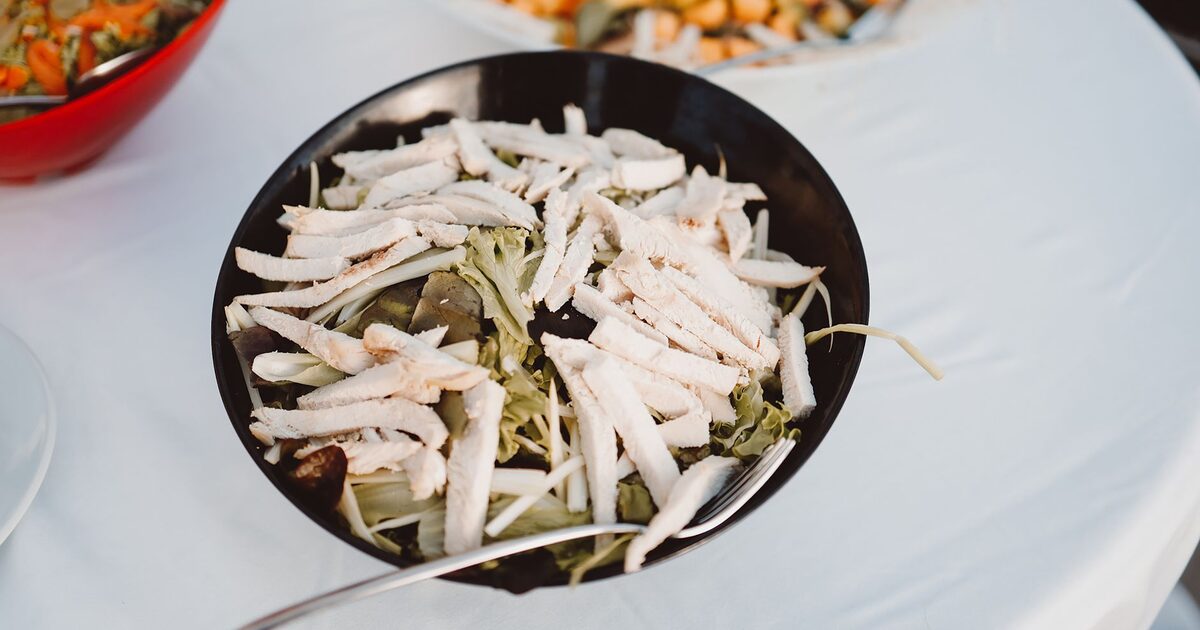
- 150 g chicken breast over rice with a big handful of greens (~46 g)
- Lean beef and bean chilli, two-thirds beef to one-third kidney beans (~40 g per bowl)
- Baked salmon fillet (150 g) with potatoes and broccoli (~37 g)
- Tofu and edamame stir-fry, 150 g firm tofu plus 100 g shelled edamame (~36 g)
Snacks that pull their weight
- Cottage cheese (200 g) with cucumber and black pepper (~22 g)
- A protein shake with milk (~35 g)
- Tinned tuna on two oatcakes (~26 g)
- Roasted edamame or a small tin of mixed beans (~12-15 g)
For full builds with weights and method, browse our recipes and filter for the higher-protein options. The FitBot Coach app can log these and tally your daily total automatically, so you're not doing arithmetic at every meal.
Common mistakes to avoid
- Underestimating portions. A "chicken breast" on the plate is often 120-130 g, not the 200 g people assume. Weigh your food for a week and your guesses get far better.
- Drinking your protein and little else. Shakes are convenient, but whole foods bring fibre, micronutrients and more chewing, which helps satiety. Use powder to fill gaps, not as the foundation.
- Forgetting the rest of the diet. High protein doesn't mean zero carbs. Carbohydrates fuel hard training, and cutting them too far can sap performance. If you're curious where carbs fit, see our takes on whether low-carb diets actually work and on carb cycling for body composition.
- Worrying about kidney damage without cause. In people with healthy kidneys, higher protein intakes have not been shown to cause harm. If you have existing kidney disease, that's a genuine exception and a conversation for your doctor.
Where to start this week
Pick your target from the table, weigh your food for a few days to see where you actually land, and add protein to the meal that's currently lowest, which is breakfast for most people. Build from templates rather than chasing recipes, lean on whole foods first, and treat powder as a gap-filler. Hit the number consistently, train with some resistance, and the benefits, more muscle held, easier appetite control, better results from the same effort, follow on their own.
Key takeaways
- Aim for 1.6-2.2 g of protein per kg of body weight to build muscle, and lean toward 1.8-2.7 g/kg when dieting to protect it.
- Protein is the most filling macronutrient and burns 20-30% of its calories during digestion.
- Spread intake across 3-4 meals of roughly 25-40 g rather than one large dinner serving.
- Lean, complete sources (chicken, fish, eggs, dairy, soy) fit the most protein into a calorie budget.
- Build meals from templates hitting 30-45 g each; use powder to fill gaps, not as the base.
Frequently asked questions
Is a high-protein diet safe for your kidneys?
For people with healthy kidneys, higher protein intakes have not been shown to cause damage in the research. The exception is anyone with pre-existing kidney disease, who should set intake with their doctor. Staying well hydrated is sensible at any intake.
How much protein do I need to build muscle?
Roughly 1.6 to 2.2 grams per kilogram of body weight per day, paired with resistance training. For a 75 kg person that's about 120 to 165 grams. Going much higher than this adds little extra muscle benefit.
Can I get enough protein on a plant-based diet?
Yes, but it takes more planning. Combine varied sources like tofu, tempeh, lentils, edamame and soy or pea protein powder across the day. Eating enough total protein matters more than balancing amino acids at every single meal.