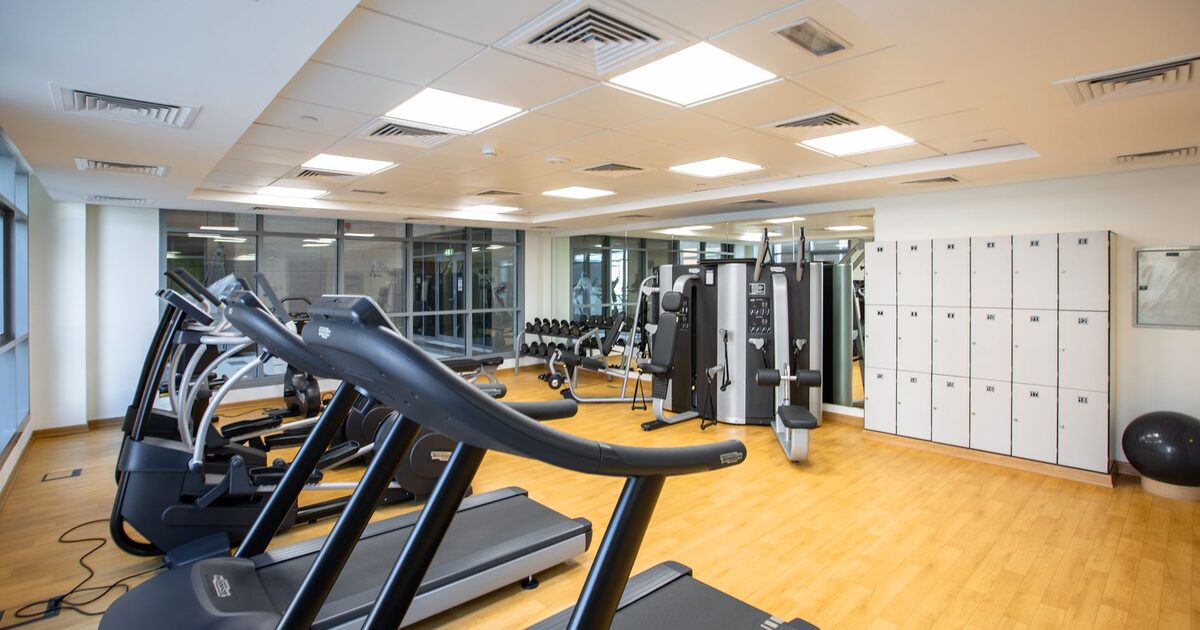
Walk into any gym on day one and you face a quiet fork in the road: the rack of dumbbells and barbells on one side, the rows of padded machines with weight stacks on the other. The honest answer to "which is better?" is that beginners do best with a mix, leaning on machines to learn the movement and on free weights to build skill that carries into real life. Here's how to decide for each exercise instead of picking a tribe.
What actually separates the two
A free weight is any load your body controls in space with nothing guiding the path: dumbbells, barbells, kettlebells, even your own bodyweight. A machine fixes the path for you, usually with a cam, pulley, or hinge, so the weight can only travel one way.
That single difference drives everything else. Because a free weight can drift in any direction, your stabiliser muscles, your grip, and your core all have to fire just to keep the bar honest. A machine takes that job away. Neither is "cheating" or "better" in the abstract; they solve different problems, and as a beginner you have both problems at once: you need to build muscle safely and learn how to move.
Where machines genuinely win for beginners
Machines shorten the learning curve. The fixed path means you can push close to your limit without a spotter and without a technical breakdown sending a barbell onto your chest. Three concrete advantages:
- You can train hard with less skill. On a leg press you can grind out a tough set the first week. A barbell back squat to the same effort might take a month of practice before it feels safe.
- Isolation is easy. Want to target the rear delts or hamstrings directly? A reverse pec deck or a seated leg curl hits them with almost no involvement from anywhere else. That's useful when one muscle lags. (More on this split in compound vs isolation exercises.)
- Lower stakes when you fail. Hit failure on a chest press machine and the stack just settles. That safety net lets you actually find your true limit, which is where a lot of growth lives.
The trade-off: the fixed path does the balancing for you, so the stabilising muscles you'll need for everyday lifting and most sports stay underdeveloped. Machines also assume an average-sized body. If you're very tall or very short, the pivot point may not line up with your joint, which can make a movement feel awkward or pinchy.
Where free weights pull ahead
Free weights ask more of you, and that's the point. A goblet squat trains your quads and glutes, but it also teaches your trunk to brace, your ankles to stay stable, and your two sides to share the load evenly. That carryover is the reason almost every serious program is built on a free-weight spine.
They also expose imbalances instead of hiding them. A barbell lets a stronger right side compensate for a weaker left. Pick up a dumbbell in each hand and the weak side has nowhere to hide, which is exactly how you fix the gap. And dumbbells let each shoulder, elbow, and wrist follow its own natural arc, so people with cranky joints often find dumbbell pressing far kinder than a fixed bar or machine handle.
Free weights are also cheaper and far more flexible. A pair of adjustable dumbbells covers dozens of movements in the space of a doormat, which matters if you train at home. Browse the exercise library and you'll notice the free-weight entries vastly outnumber machine ones, simply because a barbell or dumbbell can be pointed at almost any goal.
A side-by-side you can actually use
| Factor | Machines | Free weights |
|---|---|---|
| Learning curve | Short — sit down and go | Longer — technique takes weeks |
| Safety without a spotter | High | Lower on heavy barbell lifts |
| Core and balance work | Minimal | Substantial |
| Real-life and sport carryover | Limited | Strong |
| Fixing left/right imbalances | Poor (most machines) | Excellent with dumbbells |
| Cost and space | High | Low |
| Fit for unusual body sizes | Sometimes awkward | Adapts to you |
The beginner's playbook: use both on purpose
You don't have to choose. The smartest first few months blend the two so you build muscle now and skill in parallel. A simple rule of thumb: learn the pattern on a machine or a light free-weight version, then graduate the lift to a barbell or dumbbell as your form locks in.
Here's how that looks across the main movements:
- Squat pattern. Start with the leg press and a goblet squat holding one dumbbell at your chest. Cue: sit back like you're reaching for a chair behind you, knees tracking over your toes, chest tall. Add the barbell back squat once you can goblet squat 20 kg for 10 clean reps.
- Hinge pattern. Learn the dumbbell Romanian deadlift before you touch a barbell deadlift. Cue: push your hips back, keep a slight knee bend, feel a stretch in the hamstrings, and stop the descent when your back wants to round.
- Horizontal push. Begin on the chest press machine, then move to the dumbbell bench press, which lets your shoulders move freely and builds stability the machine skips.
- Vertical pull. Use the lat pulldown to build the strength for your first pull-up. Drive your elbows down toward your back pockets rather than just hauling with the arms.
- Horizontal pull. A seated cable row or chest-supported machine row teaches you to squeeze the shoulder blades together without cheating with your lower back.
For each, the numbers that matter early on are simple: pick a weight you can lift for 8 to 12 reps with two or three reps left in the tank, do 2 to 4 sets, and rest 90 seconds to 2 minutes between them. Add a little weight or a rep when a set starts to feel easy. If you want this laid out as a full week, follow how to build your first workout plan.
Two mistakes to skip
- Living entirely on machines. It feels productive and safe, but six months in you'll be strong on the machines and shaky the moment a barbell appears. Build the free-weight skill while the loads are still light and forgiving.
- Forcing heavy barbell lifts in week one. Ego-loading a back squat or deadlift before the pattern is grooved is the fastest route to a tweaked back. Earn the bar.
So, which is better?
For a beginner, the better tool is whichever one lets you train a movement hard and safely today, while you build toward free weights for the long run. In practice that means most people should start each new exercise on a machine or a light dumbbell, then migrate to barbells and heavier dumbbells over the first two to three months. You'll get the safety and confidence of machines now and the durable, transferable strength of free weights for the years after.
Strength is only half the equation, though. None of this shows on the mirror without enough protein and a sensible calorie target to back it up, so pair your training with simple, high-protein recipes. And if you'd rather have the machine-to-barbell progression, sets, and rest timers handled for you, that's exactly what the app is built to do.
Key takeaways
- Beginners should use both: learn the pattern on machines, then graduate to free weights.
- Machines shorten the learning curve and let you train near-failure safely without a spotter.
- Free weights build core, balance, and real-life carryover that machines can't replicate.
- Dumbbells expose and fix left/right strength imbalances a barbell or machine hides.
- Start most lifts with 2-4 sets of 8-12 reps, 2-3 reps in reserve, 90s-2min rest.
Frequently asked questions
Should a complete beginner start with free weights or machines?
Start with both. Use machines and light dumbbells to learn each movement safely, then progress to barbells and heavier dumbbells over your first two to three months. This gives you the safety of machines now and the transferable strength of free weights for the long run.
Are machines safer than free weights?
For training close to your limit without a spotter, yes. The fixed path means a failed rep just settles the weight stack rather than dropping a loaded barbell. Free weights become very safe too once your technique is grooved and you're not ego-loading the bar.
Can I build muscle using only machines?
Yes, machines build muscle effectively because muscle growth depends on effort and progressive overload, not the type of equipment. The catch is that machine-only training neglects the balance, core, and stabiliser strength you'll need the moment you pick up a barbell or play a sport.