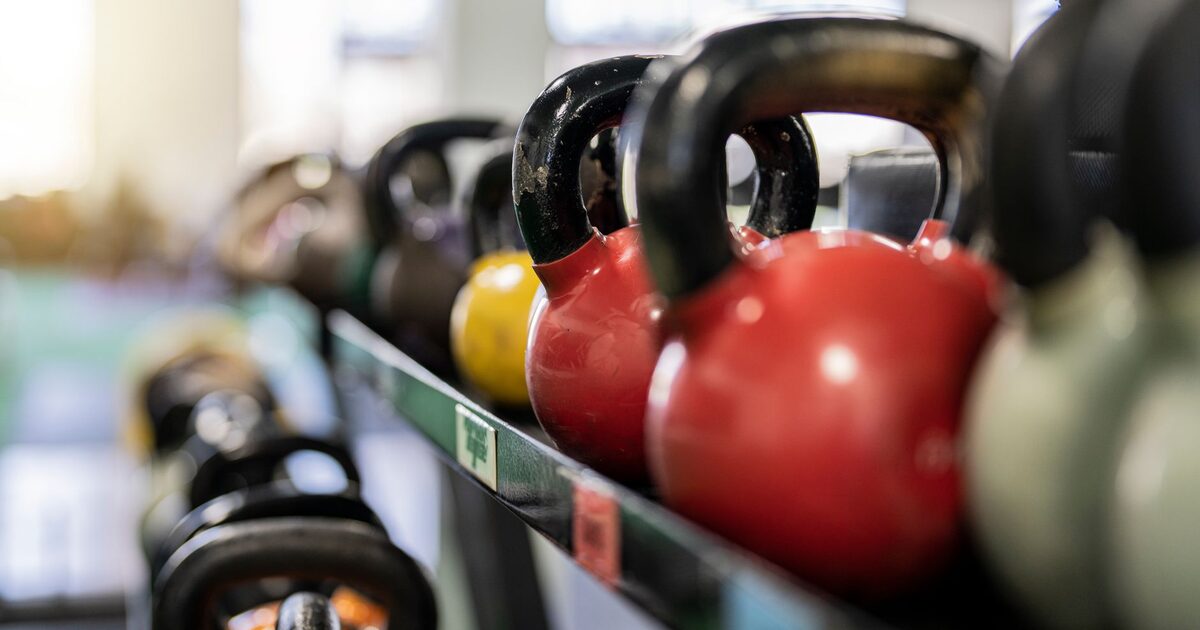
One kettlebell, a patch of floor, and 25 minutes is enough to train your whole body. That's the quiet appeal of the bell: it loads the moves humans actually do — picking things up, carrying them, swinging a hip through — without the rack of plates a barbell needs. If you've got a single kettlebell sitting in a corner and no real plan for it, this is the plan.
Why a single bell does so much
A kettlebell's weight hangs below the handle, off-centre from your grip. That offset forces your forearms, shoulders, and trunk to fight rotation on every rep, so a "simple" press or carry quietly trains stability you'd never get from a fixed dumbbell. The shape also makes ballistic work — swings, cleans, snatches — safe to do at home, because the bell travels in an arc away from your body rather than straight down onto your toes.
For anyone training in a flat or a spare bedroom, that efficiency matters. You're not storing six pairs of dumbbells; you're storing one object that covers squats, hinges, presses, rows, and conditioning. If small-footprint training is your constraint, it pairs naturally with bodyweight work and the layouts in our guide to workouts for small spaces.
Choosing your first kettlebell
This is where most beginners go wrong — they buy too light. A kettlebell that feels heavy for a biceps curl is still trivial for a hip swing, because your hips and glutes are far stronger than your arms. Buy for the strongest movement you'll do, not the weakest.
Rough starting points for a first single bell:
- Most women: 8 kg (18 lb) for presses and rows, but plan to swing a 12 kg before long.
- Most men: 12 kg (26 lb) as a do-everything starter; 16 kg (35 lb) if you already lift.
- Older or returning to training: drop one size and add reps rather than weight for the first month.
If you can only own one, size it for the swing and accept that overhead presses will feel hard at first — that's the easier gap to close. A cast-iron bell with a smooth, matte handle (no rough seams) is the standard; adjustable bells work but the chunky handle makes swings less comfortable.
The five moves that cover everything
Learn these five and you can build months of training. Practise each unloaded or with a light bell until the pattern is automatic, then add weight.
1. Goblet squat
Hold the bell against your chest by the horns, elbows tucked. Sit straight down between your knees, keeping your heels planted and chest tall. Your elbows should brush the inside of your knees at the bottom. This is the safest squat to learn because the front-loaded weight forces an upright torso for you. Aim for 8–12 reps.
2. Kettlebell deadlift
Stand over the bell with it between your heels. Push your hips back, hinge until your hands reach the handle, then stand up by driving the floor away and squeezing your glutes at the top. Keep the bell close to your shins. This teaches the hinge — the foundation for the swing — at zero speed. Do 8–10 reps.
3. Two-hand swing
The signature movement, and a hinge, not a squat. Hike the bell back between your legs like a rugby pass, then snap your hips forward so the bell floats up to chest height on momentum alone — your arms just guide it. Don't lift it with your shoulders. The power comes from a sharp glute contraction. Start with sets of 10–15 reps, rest, repeat.
4. Half-kneeling press
Kneel on one knee with the bell racked at your shoulder. Press it straight overhead until your bicep is by your ear, then lower under control. The half-kneeling stance stops you arching your lower back to cheat the weight up. Press 6–8 reps per arm, switching the down knee to match the pressing arm.
5. Single-arm row
Hinge forward with one hand braced on a bench, chair, or your own thigh. Let the bell hang, then pull it to your hip, leading with the elbow and squeezing the shoulder blade. Pause for a beat at the top. This balances all the pressing and builds the upper back. Row 8–10 reps per side.
A 25-minute beginner workout
Run this as a circuit three days a week, with at least one rest day between sessions. Do all the reps of one exercise, rest as listed, then move to the next. After the last move, rest a full minute and repeat the circuit. Three rounds total is plenty for week one.
| Exercise | Reps | Rest |
|---|---|---|
| Goblet squat | 10 | 30 sec |
| Two-hand swing | 15 | 45 sec |
| Half-kneeling press | 6 per arm | 30 sec |
| Single-arm row | 8 per arm | 30 sec |
| Kettlebell deadlift | 10 | 45 sec |
That's roughly 7–8 minutes per round including rest, so three rounds plus a short warm-up lands you near 25 minutes. When all three rounds feel manageable two sessions running, that's your signal to progress — add a fourth round, then add reps, and only then reach for a heavier bell. You'll find video demonstrations of each of these in the exercise library.
Form mistakes that hold beginners back
- Squatting the swing. If the bell drops below your knees on the backswing or your shins move forward, you're squatting it. Keep the hike high — the bell should pass above your kneecaps — and think "hips back," not "down."
- Yanking with the arms. Your arms are ropes. On the swing, if your shoulders burn before your glutes do, you're muscling it up instead of letting your hips throw it.
- Over-extending at the top. Finish the swing standing tall with a hard glute squeeze, not leaning back. Leaning back to "reach height" loads your lower spine.
- Letting the bell wander away. On deadlifts and rows, a bell that drifts forward turns into a lever on your lower back. Keep it close.
Warming up and recovering
Spend three to five minutes before each session on hip circles, bodyweight squats, and 10 light unloaded hinges to groove the pattern. Kettlebell work, especially swings, hits your posterior chain hard, so expect your hamstrings and glutes to be sore for the first week or two. Treat protein as non-negotiable on training days — aim for a serving at each meal to support recovery — and our recipes have plenty of high-protein options that take ten minutes.
Where to go from here
Once the five basics feel solid, the natural next steps are the kettlebell clean (getting the bell to the rack position smoothly), the front-rack reverse lunge, and the Turkish get-up — a slow, methodical full-body lift that's worth the time to learn. You don't need a second bell for months; you need to get strong and confident with the one you have. If you'd like a structured beginner plan that adjusts the weights and reps as you progress, the FitBot Coach app builds one around the equipment you actually own.
Key takeaways
- One kettlebell trains your whole body: squats, hinges, presses, rows, and conditioning in 25 minutes.
- Buy for the swing, not the curl. Most men start at 12 kg, most women at 8 kg and build to 12 kg.
- Master five moves first: goblet squat, deadlift, two-hand swing, half-kneeling press, single-arm row.
- The swing is a hip hinge, not a squat. Power comes from a sharp glute snap, not your arms.
- Run the circuit three days a week with a rest day between, and add rounds before adding weight.
Frequently asked questions
What weight kettlebell should a beginner buy?
If you can only buy one, size it for the swing, since your hips are far stronger than your arms. Most men start with a 12 kg bell and most women with 8 kg, expecting overhead presses to feel hard at first. That gap closes quickly as you build strength.
How often should beginners do kettlebell workouts?
Three sessions a week with at least one rest day between them is ideal while you're learning. That gives your posterior chain time to recover, since swings and deadlifts make your hamstrings and glutes sore early on. Add a fourth round or extra reps before you reach for a heavier bell.
Are kettlebell swings safe for your back?
Yes, when you hinge instead of squat and finish standing tall rather than leaning back. The power should come from snapping your hips forward and squeezing your glutes, not from lifting with your shoulders or arching your lower spine. Keep the bell close and the backswing high, above your kneecaps.